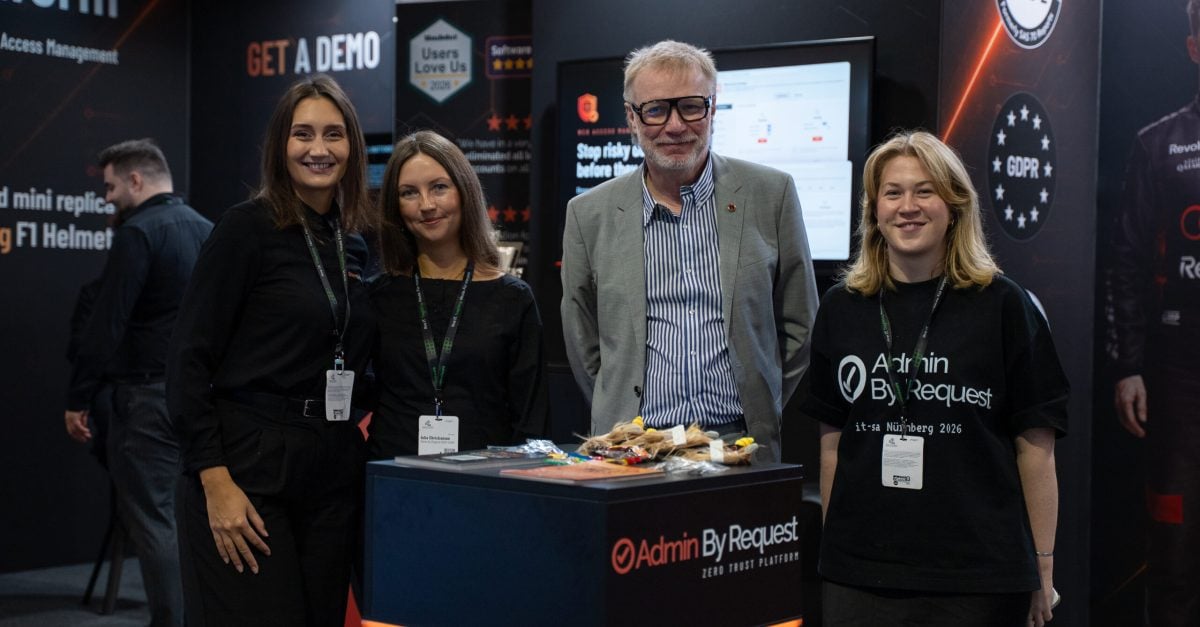
it-sa 2026 was the biggest, busiest and most AI-saturated edition yet. It was also the year the industry admitted, mostly by accident, that it has not worked out who is responsible when an agent does something it shouldn’t.
I have been going to trade shows for the best part of three decades, first with a notebook as a journalist, then as an analyst, now from the vendor side of the aisle. The ritual is always the same. The organiser announces record visitor numbers, the trade press dutifully reports them, and somewhere in the small print is the thing that actually mattered. So rather than give you one person’s sore-footed view of Nuremberg, I have read what the German, Swiss and channel press wrote about it-sa 2026 and set it against what I heard on the floor. Here is what I think it adds up to.
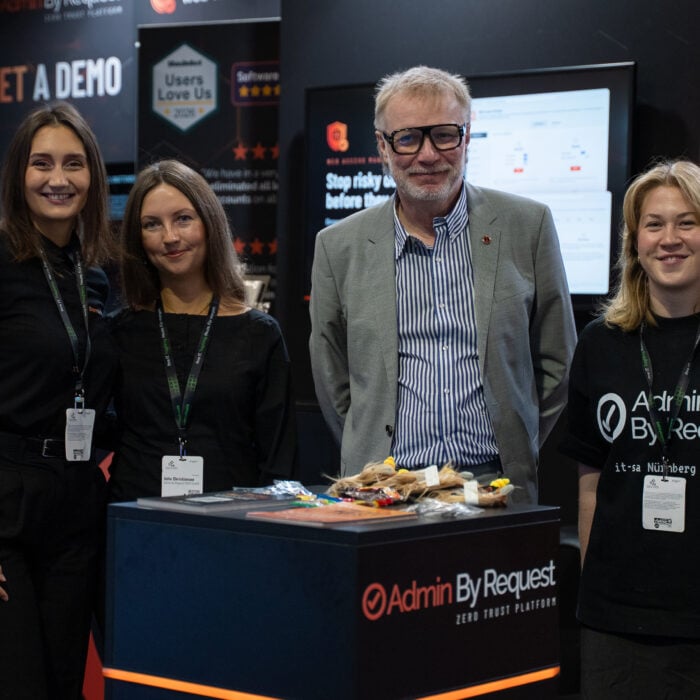
This was my first it-sa, and I arrived braced for the worst. Everyone around me had warned me to expect a vast, unnavigable sprawl, CeBIT of old reborn in Bavaria. It wasn’t. The venue is modern, easy to find your way around, and blessed with daylight where you need it most. Entry is automated and easy – no badge scanners here on every corner. One tip for first-timers: pick up the paper map at the entrance and follow the hall numbers. It sounds quaint, but it works better than any show app I’ve used (it-sa say one is coming for 2027, please keep the paper version).
AI Agents Arrived. The Control Model Did Not
Every write-up agrees on the headline: AI security was the word of the show. Lars Becker at it-daily.net put it most plainly, concluding that the age of AI agents is here. I would only add that it arrived in two costumes. One was AI as a feature, bolted into detection and SOC automation. The other was AI as the thing that needs securing: prompt injection, data leakage, and autonomous agents holding sweeping permissions.
The second costume is the interesting one, and the numbers being thrown around were striking:
- Zscaler’s Christoph Schuhwerk told it-daily.net he expects an “M-Day” this month, the point at which open-weight models catch up with Anthropic’s restricted Mythos model and that capability lands in attackers’ hands. He also forecast 50 AI agents per human user.
- Omada’s Thomas Müller-Martin described firms driving AI in a sports car with yesterday’s brakes, arguing identity security is what makes the speed possible.
- Sophos’s Sven Janssen made the quieter but more important point: even when AI spots a threat in seconds, customers still want to understand what actually happened.
- Open Systems launched a deception layer on the working assumption that someone is already inside the network.
Here is my problem with the identity framing, and I say this as someone who spent years covering IAM. If you really do end up with 50 agents per person, the question “who is this agent?” stops being the useful one. Agents get forked, coerced by a prompt, or stripped of their credentials. Identity tells you who was supposed to act. It does not tell you whether this particular action should be allowed, right now, on this machine.
That is why Janssen’s comment stuck with me more than the sports car. Customers are not asking for a better name badge for their agents.
They are asking to understand, and constrain, what was done. Govern the action, not the actor. Nobody at it-sa quite said it, but plenty of the conversations were circling it.
Sovereignty: Everyone’s Talking, Few Are Leading
Digital sovereignty was the clear number two theme, and German and European vendors reported demand rising sharply, especially from the public sector. ADN’s Erik Forod told ChannelPartner the market is demanding it. Some non-US exhibitors went as far as hanging their own national flags over the stand, Canada’s among them, to make the point without saying it.
The most honest line of the week came from Philip Weber, CEO of Elovade: everyone talks about sovereignty, but few want to go first. Many buyers are used to international products, rate them highly and are comfortable with the risk.
And Joanna Świątkowska, Secretary General of ECSO, conceded at a press event that a genuine market for European cybersecurity is still more aspiration than reality, because vendors remain focused on their own national markets. That is worth sitting with. Sovereignty is being sold hard in Nuremberg, but the single European market that would make it real does not yet exist.
What the Show Got Right
The forum theatres were a pleasant surprise. Instead of the usual black-curtained boxes, they are open, with raised comfortable seating and surprisingly good sound. You can see what is on from the aisle and drop in, which is how a trade show talk should work.
Stand design has also moved up a gear. Large LED video walls and motion graphics are now the norm, and the best stands feel closer to a modern flagship store than a trade booth. Whether the message behind the screens has kept pace is a different question, but the craft is undeniable.
Growing Pains – You Can’t Please Everyone
Read the numbers carefully and two stories emerge. Visitors rose by about a fifth. Exhibitors rose by just 12, to 1,005. ChannelPartner’s Peter Marwan noted, fairly, that the 1,000-exhibitor milestone was largely symbolic. it-sa is not getting many more stands; it is getting much more crowded around the ones it has.
That has consequences the press picked up on:
- Some exhibitors told it-daily.net the show had become hard to navigate, as it has got bigger
- Stands next to the six open forums suffered constant noise, according to ChannelPartner.
- Exhibitors worry about vanishing in the crowd; visitors struggle to run a focused programme.
- Almost all major security distributors were there; Exclusive Networks was the notable absentee, choosing smaller events instead.
The organiser’s answer is more: Hall 10 next year, a standalone it-sa Conference launched with a “Cyber thought leaders dialogue” featuring Bavarian and federal officials, and a rebrand tying Expo, Conference and the year-round it-sa 365 together. For a first-timer the layout held up well, but a sixth hall will test it.
In fairness, the one point every report made is the one that counts. Visitors came with real problems. Exhibitors said it, the organiser said it, the journalists said it. Volume is a vanity metric; a hall full of people with a budget and a specific question is not.
My Verdict
Sitting at the heart of Europe, it-sa is well on its way to becoming the most prestigious security event in our region. 2026 confirmed Nuremberg as the place European security buyers actually go to buy, rather than to be seen. On that measure it had its best year.
But the show also exposed a gap between what the industry is saying and what it can yet deliver:
- On AI agents, the vocabulary has arrived, but the control model has not. Too much of the floor still treats agents as a new kind of user to be named and badged, rather than a stream of actions to be constrained at the point they happen.
- On sovereignty, demand is real, but the European market that would satisfy it is, by ECSO’s own admission, not there yet.
Prof. Marco Gercke’s closing keynote may be the best metaphor for the week. He ran a live ransomware simulation and let the audience vote as the board. They could not agree, which he said is exactly what happens in a real incident: decisions and responsibilities have to be settled before the crisis, not during it. Swap “ransomware” for “rogue agent” and that is the homework for every security team leaving Nuremberg.
See you in October 2027. Bring better shoes.
Were you there? I’d like to hear what you saw that the press didn’t.